

Definition and discussion
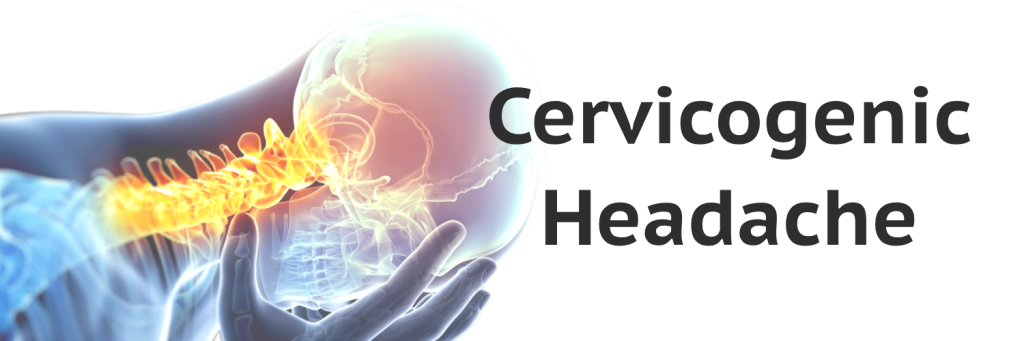
Head pain arising from the upper cervical spine. Pain is precipitated or aggravated by specific neck movements or sustained postures. Pain may radiate to the forehead, orbital region, temples or ears.
Aetiology
Affects females more than males Current theories:
- Disorder of the neck recognised as referred pain in the head
- Due to prior neck trauma, cervical joint dysfunction, sustained neck postures or repetitive neck or shoulder motions
- Primary sensory afferents from roots C1-C3 converge with afferents from occiput and trigeminal afferents on the same second order neuron in the upper cervical spine. Results in anatomical structures innervated by cervical roots C1-C3 as potential sources of cervicogenic headache (pain referral from upper cervical anatomy such as muscles, ligaments, joint capsules, joints and vertebral discs)
- More recent studies have demonstrated connective tissue bridges at atlanto-occipital junction and between rectus capitis posterior minor muscles and dorsal spinal dura (perpendicular arrangement of these fires appears to restrict dural movement towards the spinal cord). Ligamentum nuchae was found to be continuous with posterior cervical spinal dura and lateral portion of the occipital
History, symptoms and signs
- Upper cervical and occipital pain
- Pain may radiate to the forehead, orbital region, temples or ears
- Pain may radiate to the ipsilateral neck, shoulder or arm (non-dermatomal pattern)
- Pain exacerbated by neck movement and/or sustained awkward head positioning (such as painting the ceiling or washing the floor)
- Previous neck trauma is a predisposing factor
- Vitals
- Altered head posture and muscle hypertonicity
- Tenderness over muscles, joints, ligaments
- Decreased or limited cervical spine ROM
- Joint compression and distraction tests may be positive
- Multiple upper cervical joint restrictions or dysfunctions
- Neurologic and vascular tests to rule out abnormalities
- No significant radiographic findings (possible abnormalities in flexion/extension studies and abnormal posture)
Management
- During initial acute presentation a higher visit frequency is warranted. As symptoms subside visit frequency should be lowered
- Stress reduction and regular exercise
- Positions to avoid – aggravating loading positions; sleeping positions without pain
Prognosis
- Early diagnosis & comprehensive multidisciplinary management are
- Complete recovery is expected in most cases, however, with coinciding underlying chronic conditions prognosis, is somewhat guarded
